
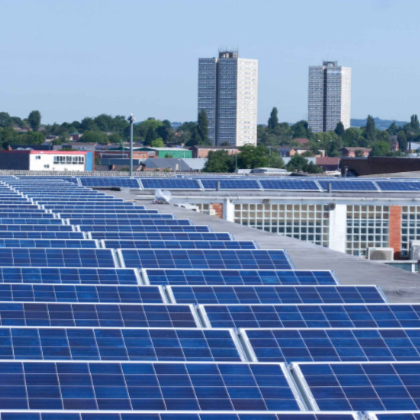
Welcome to the Design, Installation and Maintenance of Commercial and Industrial PV and Battery Systems.
This course comprises 8 modules covering the scope of commercial and industrial solar PV and battery system work, from project frameworks and procurement through to commissioning and maintenance.
Upon completion of each module you will receive an automatically generated certificate that can be used to submit CPD points with Solar Accreditation Australia (SAA), for a total of 150 CPD points across the full course.
The course comprises of the following elements:
- Module 1: Project Framework and Standards Landscape (20 CPD points)
- C&I vs Domestic: the De-risking Mindset
- Who's Who: Stakeholders, Roles, and Accountability Gaps
- Project Lifecycle Part 1: Inception to EPC Selection
- Project Lifecycle Part 2: Detailed Design through O&M
- Risk Allocation and QA Gates
- The Standards Landscape
- Tradable Certificates: STC, LGC, VEEC, REGO, I-REC
- Approvals, DNSP Process, and Metering
- Module 2: Supply Chain, Procurement and Logistics (15 CPD points)
- Procurement Models : OEM-Direct vs Distributor
- Risks, Forex, and Lead Times in OEM Procurement
- Contracts, Incoterms, and Risk Transfer
- Warehousing, Logistics, and Site Handling
- Module 3: WHS and Construction Planning (20 CPD points)
- Safe Work Planning, SWMS and Site Inductions
- Site Controls, Traffic, Waste, Exclusion Zones, and Compliance
- Lifting and Access, Equipment Selection and Lift Planning
- Weather, Rescue, and Edge Protection
- Managing Live-Site Interfaces and After-Hours Work
- Planned Shutdowns and Critical Infrastructure
- Module 4: Additional Engineering Coordination (20 CPD points)
- Roof Types and Mounting Strategies
- Ground-Mounted and Carpark Systems
- Expansion Joints, Thermal Movement, Corrosion and Fixings
- Fire Stopping and Penetrations
- Structural Certification, Wind Actions and Load Paths
- Trenching, Underground Services and BYDA
- Conduits, Foundations and Equipment Plinths
- Module 5: Electrical Design, Point of Connection and Protection (20 CPD points)
- Point of Connection Selection
- Metering Boundaries and Long-term Flexibility
- Protection Coordination and Fault Levels
- Interface Protection and DNSP Requirements
- Emergency Backstop Mechanism
- Voltage Rise, Harmonics and Network Compliance
- Module 6: Equipment Selection (20 CPD points)
- String Design and MPPT Optimisation
- Inverter Station Design and Module Selection
- BESS Fundamentals and Safety
- BESS Operations, Communications and Cyber Security
- Module 7: Cabling, Thermal and Cable Management (20 CPD points)
- Cable Selection : Copper, Aluminium and Thermal Design
- Jointing, Terminations and Connection Integrity
- Earthing and Earth Grid Design
- Cable Infrastructure, Trays, Underground, Routing and Labelling
- Module 8: Commissioning, Testing, and Maintenance (15 CPD points)
- Commissioning and Compliance Verification
- Handover, Monitoring and Long-term O&M
- Common Design Issues
- Operational Failure Modes
Welcome to the Design, Installation and Maintenance of Commercial and Industrial PV and Battery Systems.
This course comprises 8 modules covering the scope of commercial and industrial solar PV and battery system work, from project frameworks and procurement through to commissioning and maintenance.
Upon completion of each module you will receive an automatically generated certificate that can be used to submit CPD points with Solar Accreditation Australia (SAA), for a total of 150 CPD points across the full course.
The course comprises of the following elements:
- Module 1: Project Framework and Standards Landscape (20 CPD points)
- C&I vs Domestic: the De-risking Mindset
- Who's Who: Stakeholders, Roles, and Accountability Gaps
- Project Lifecycle Part 1: Inception to EPC Selection
- Project Lifecycle Part 2: Detailed Design through O&M
- Risk Allocation and QA Gates
- The Standards Landscape
- Tradable Certificates: STC, LGC, VEEC, REGO, I-REC
- Approvals, DNSP Process, and Metering
- Module 2: Supply Chain, Procurement and Logistics (15 CPD points)
- Procurement Models : OEM-Direct vs Distributor
- Risks, Forex, and Lead Times in OEM Procurement
- Contracts, Incoterms, and Risk Transfer
- Warehousing, Logistics, and Site Handling
- Module 3: WHS and Construction Planning (20 CPD points)
- Safe Work Planning, SWMS and Site Inductions
- Site Controls, Traffic, Waste, Exclusion Zones, and Compliance
- Lifting and Access, Equipment Selection and Lift Planning
- Weather, Rescue, and Edge Protection
- Managing Live-Site Interfaces and After-Hours Work
- Planned Shutdowns and Critical Infrastructure
- Module 4: Additional Engineering Coordination (20 CPD points)
- Roof Types and Mounting Strategies
- Ground-Mounted and Carpark Systems
- Expansion Joints, Thermal Movement, Corrosion and Fixings
- Fire Stopping and Penetrations
- Structural Certification, Wind Actions and Load Paths
- Trenching, Underground Services and BYDA
- Conduits, Foundations and Equipment Plinths
- Module 5: Electrical Design, Point of Connection and Protection (20 CPD points)
- Point of Connection Selection
- Metering Boundaries and Long-term Flexibility
- Protection Coordination and Fault Levels
- Interface Protection and DNSP Requirements
- Emergency Backstop Mechanism
- Voltage Rise, Harmonics and Network Compliance
- Module 6: Equipment Selection (20 CPD points)
- String Design and MPPT Optimisation
- Inverter Station Design and Module Selection
- BESS Fundamentals and Safety
- BESS Operations, Communications and Cyber Security
- Module 7: Cabling, Thermal and Cable Management (20 CPD points)
- Cable Selection : Copper, Aluminium and Thermal Design
- Jointing, Terminations and Connection Integrity
- Earthing and Earth Grid Design
- Cable Infrastructure, Trays, Underground, Routing and Labelling
- Module 8: Commissioning, Testing, and Maintenance (15 CPD points)
- Commissioning and Compliance Verification
- Handover, Monitoring and Long-term O&M
- Common Design Issues
- Operational Failure Modes
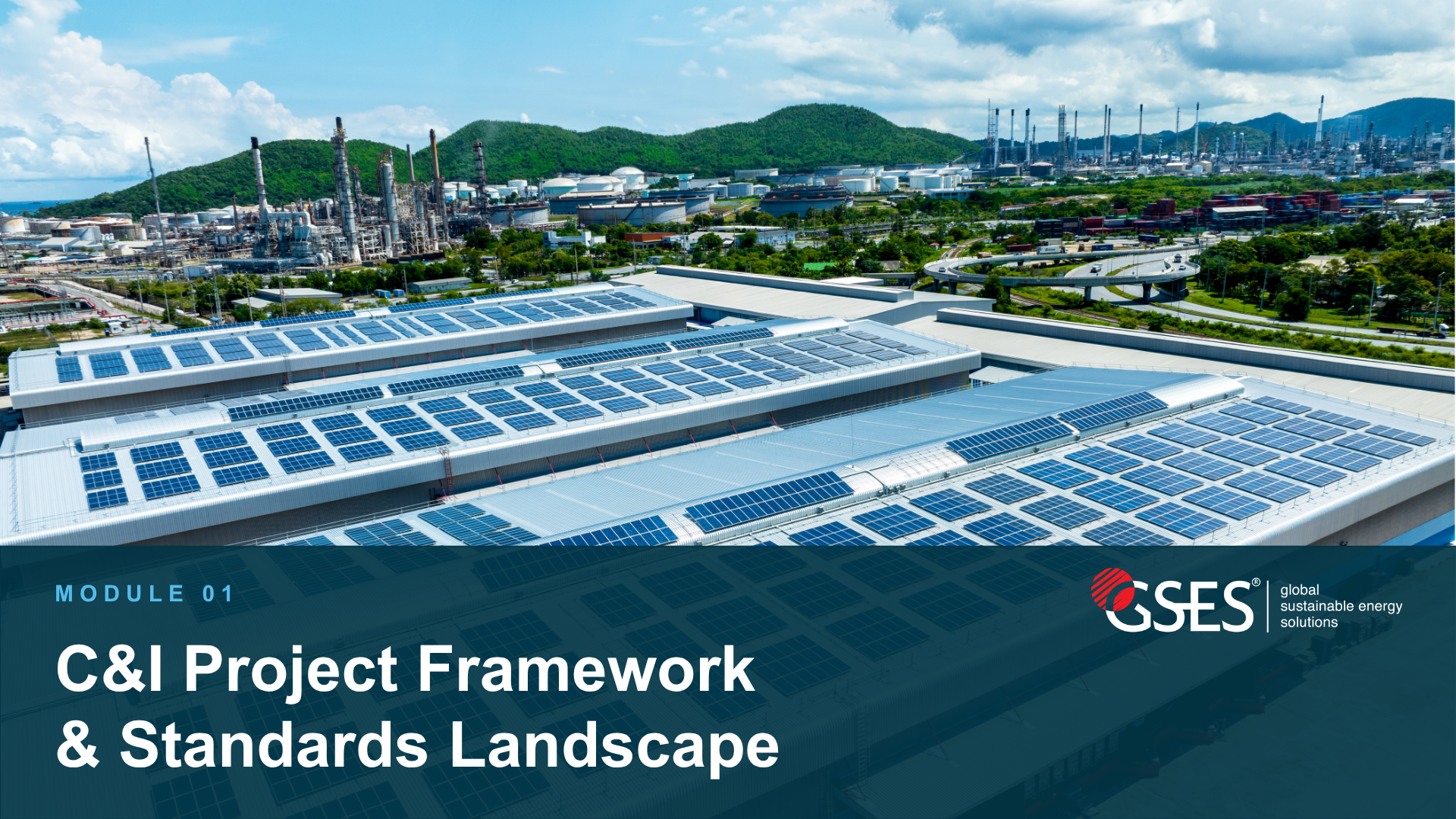
You have enrolled in the first course in the Commercial & Industrial Solar series. Upon completion of this course and all assessments, you will receive an automatically generated certificate worth 20 CPD points with Solar Accreditation Australia (SAA).
This module covers how C&I solar and battery projects are structured, governed, and delivered. You'll work through the project lifecycle from inception to O&M, explore the standards and approval landscape, and learn how risk, contracts, and tradable certificates fit into the picture.
This course covers the following topics:
- C&I vs Domestic: the De-risking Mindset
- Who's Who: Stakeholders, Roles, and Accountability Gaps
- Project Lifecycle Part 1: Inception to EPC Selection
- Project Lifecycle Part 2: Detailed Design through O&M
- Risk Allocation and QA Gates
- The Standards Landscape
- Tradable Certificates: STC, LGC, VEEC, REGO, I-REC
- Approvals, DNSP Process, and Metering
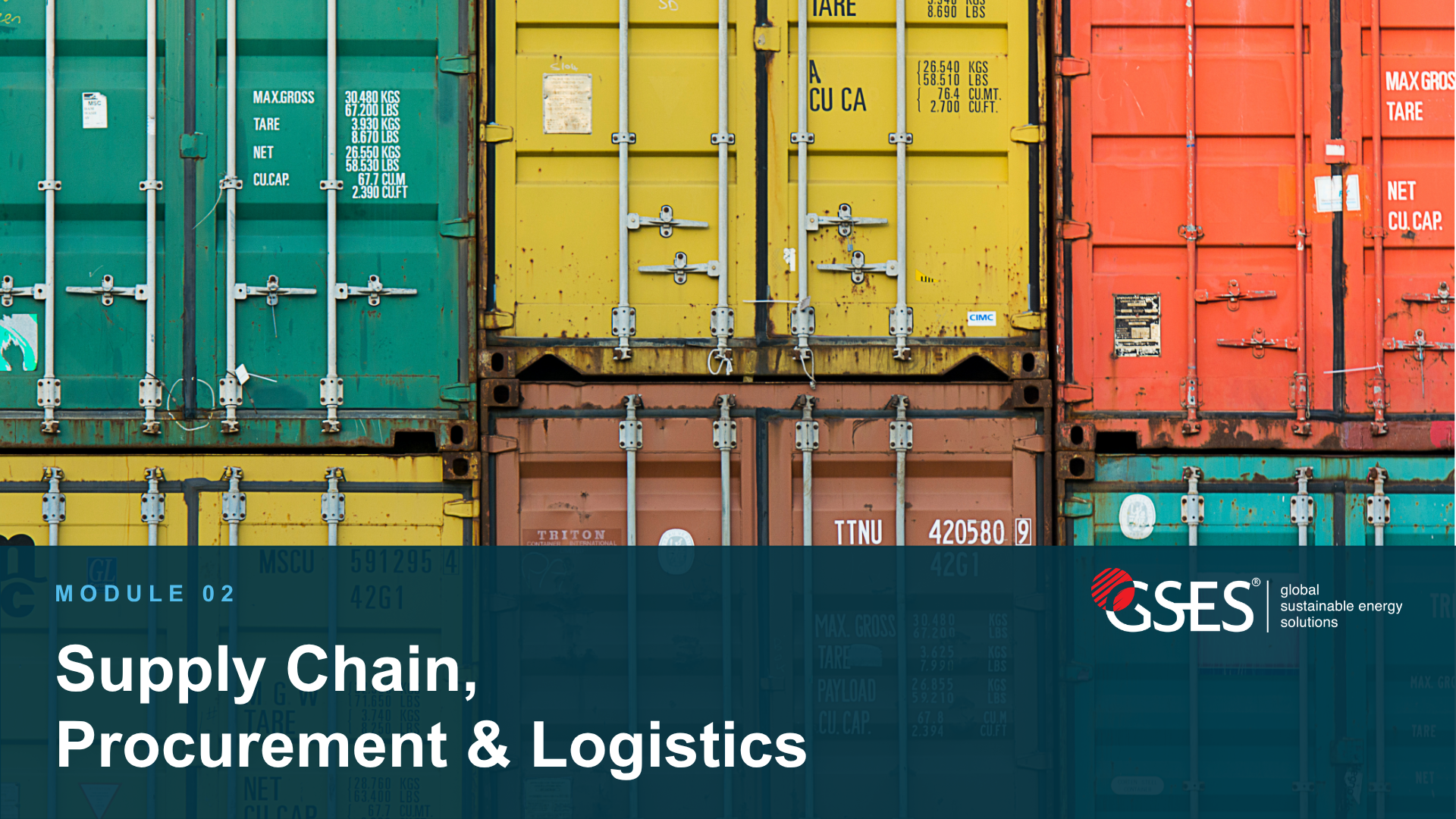
You have enrolled in the second course in the Commercial & Industrial Solar series. Upon completion of this course and all assessments, you will receive an automatically generated certificate worth 15 CPD points with Solar Accreditation Australia (SAA).
This module covers how equipment is sourced, contracted, and delivered for C&I solar projects. You'll work through procurement model decisions, foreign exchange and lead time risks, contract and Incoterms fundamentals, and the logistics and site handling requirements that keep a project on track.
This course covers the following topics:
- Procurement Models: OEM-Direct vs Distributor
- Risks, Forex, and Lead Times in OEM Procurement
- Contracts, Incoterms, and Risk Transfer
- Warehousing, Logistics, and Site Handling
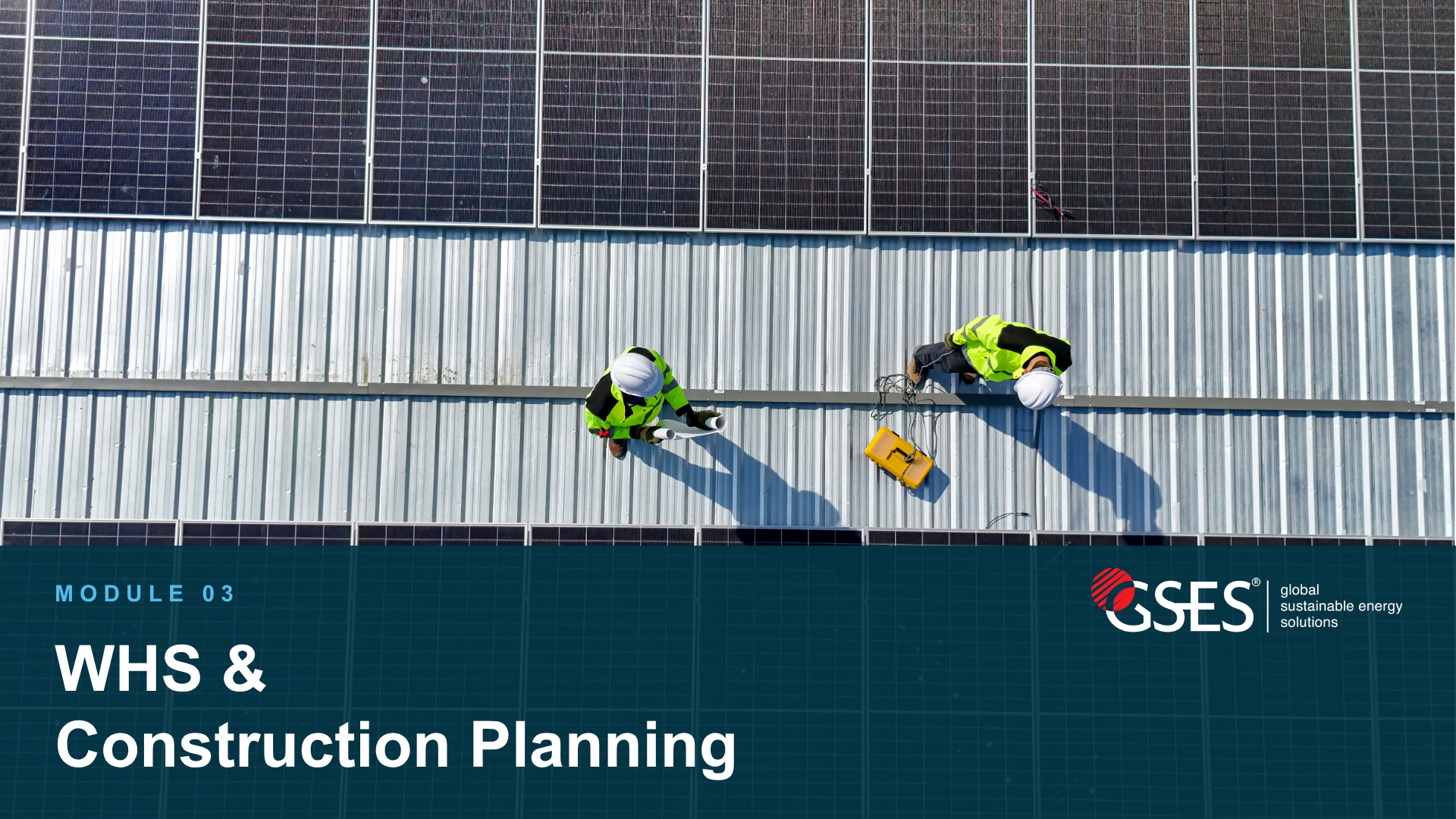
You have enrolled in the third course in the Commercial & Industrial Solar series. Upon completion of this course and all assessments, you will receive an automatically generated certificate worth 20 CPD points with Solar Accreditation Australia (SAA).
This module covers work health and safety as a planning discipline in C&I solar construction. You'll work through safe work method statements, site controls, lifting and access, weather and rescue planning, live-site interfaces, and the requirements around planned shutdowns on critical infrastructure.
This course covers the following topics:
- Safe Work Planning: SWMS and Site Inductions
- Site Controls: Traffic, Waste, Exclusion Zones, and Compliance
- Lifting and Access: Equipment Selection and Lift Planning
- Weather, Rescue, and Edge Protection
- Managing Live-Site Interfaces and After-Hours Work
- Planned Shutdowns and Critical Infrastructure
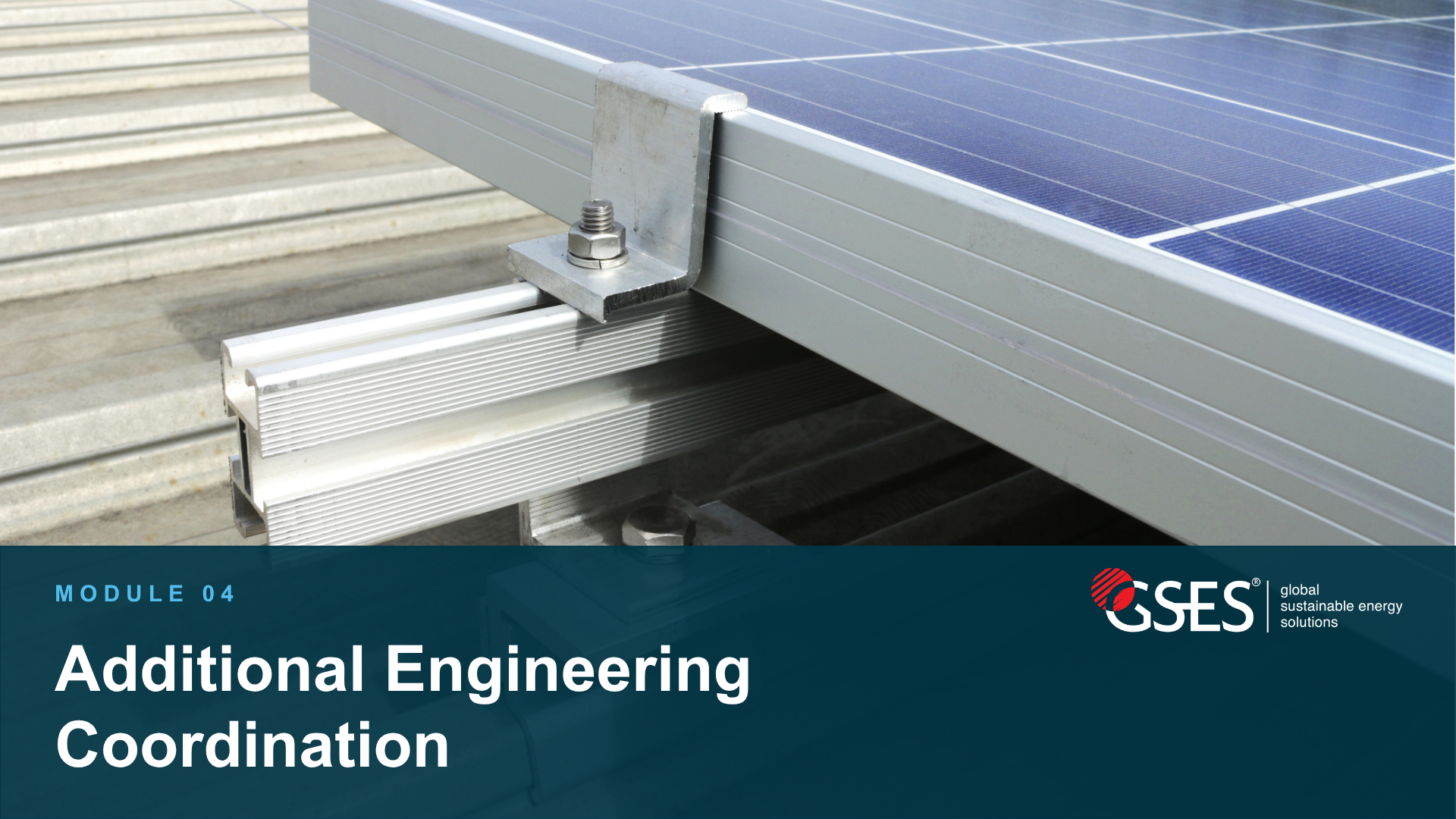
You have enrolled in the fourth course in the Commercial & Industrial Solar series. Upon completion of this course and all assessments, you will receive an automatically generated certificate worth 20 CPD points with Solar Accreditation Australia (SAA).
This module covers the structural and civil engineering disciplines that intersect with C&I solar design. You'll work through rooftop and ground-mounted mounting strategies, thermal movement and corrosion, fire stopping, structural certification, and the civil requirements around trenching, conduits, and equipment foundations.
This course covers the following topics:
- Roof Types and Mounting Strategies
- Ground-Mounted and Carpark Systems
- Expansion Joints, Thermal Movement, Corrosion and Fixings
- Fire Stopping and Penetrations
- Structural Certification, Wind Actions and Load Paths
- Trenching, Underground Services and DBYD
- Conduits, Foundations and Equipment Plinths
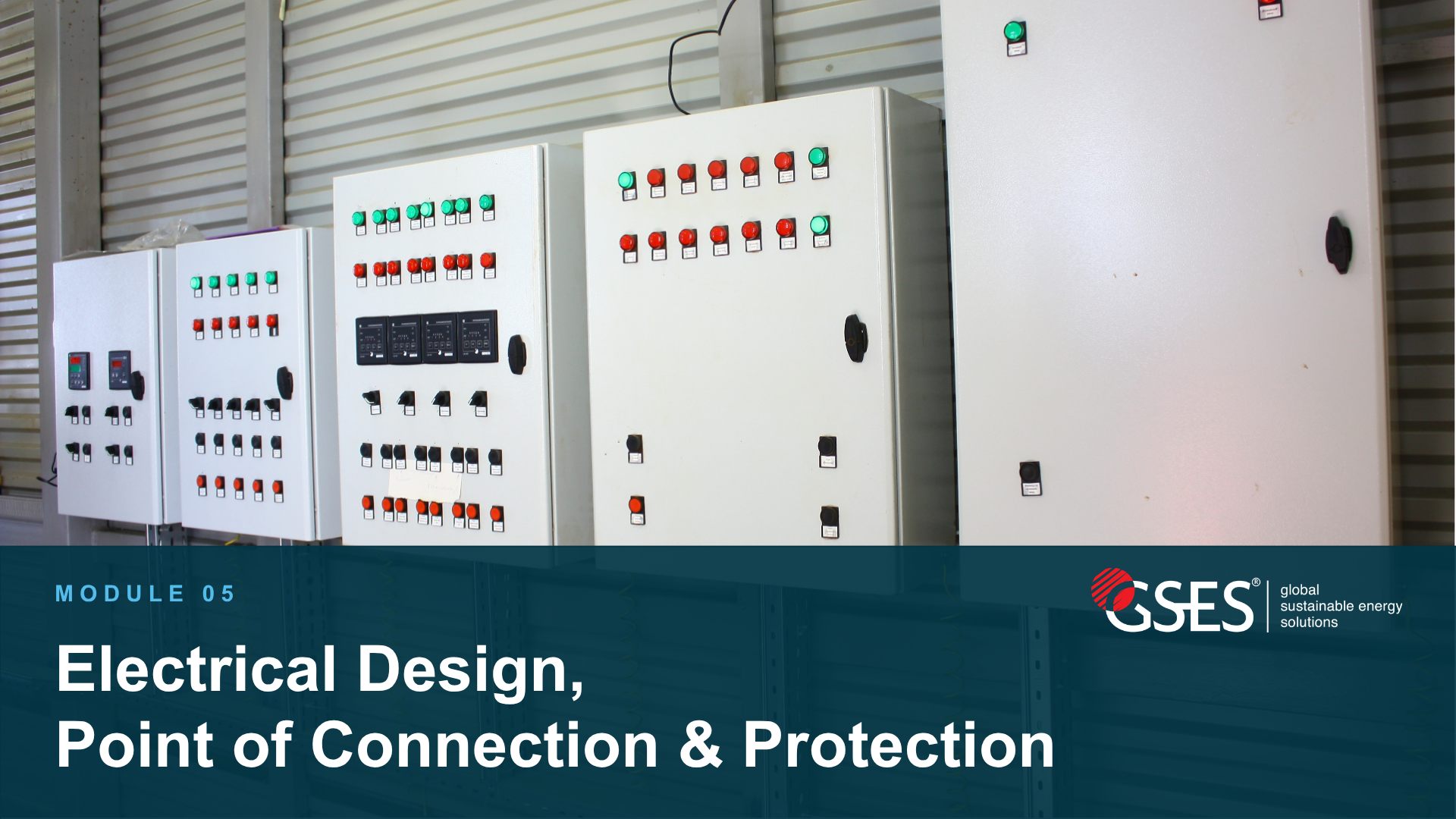
You have enrolled in the fifth course in the Commercial & Industrial Solar series. Upon completion of this course and all assessments, you will receive an automatically generated certificate worth 20 CPD points with Solar Accreditation Australia (SAA).
This module covers electrical design decisions that determine how a C&I solar or BESS system connects to and operates within a site's existing network. You'll work through point of connection selection, metering boundaries, protection coordination, interface protection, the Victorian Emergency Backstop Mechanism, and network compliance requirements.
This course covers the following topics:
- Point of Connection Selection
- Metering Boundaries and Long-Term Flexibility
- Protection Coordination and Fault Levels
- Interface Protection and DNSP Requirements
- Emergency Backstop Mechanism
- Voltage Rise, Harmonics and Network Compliance
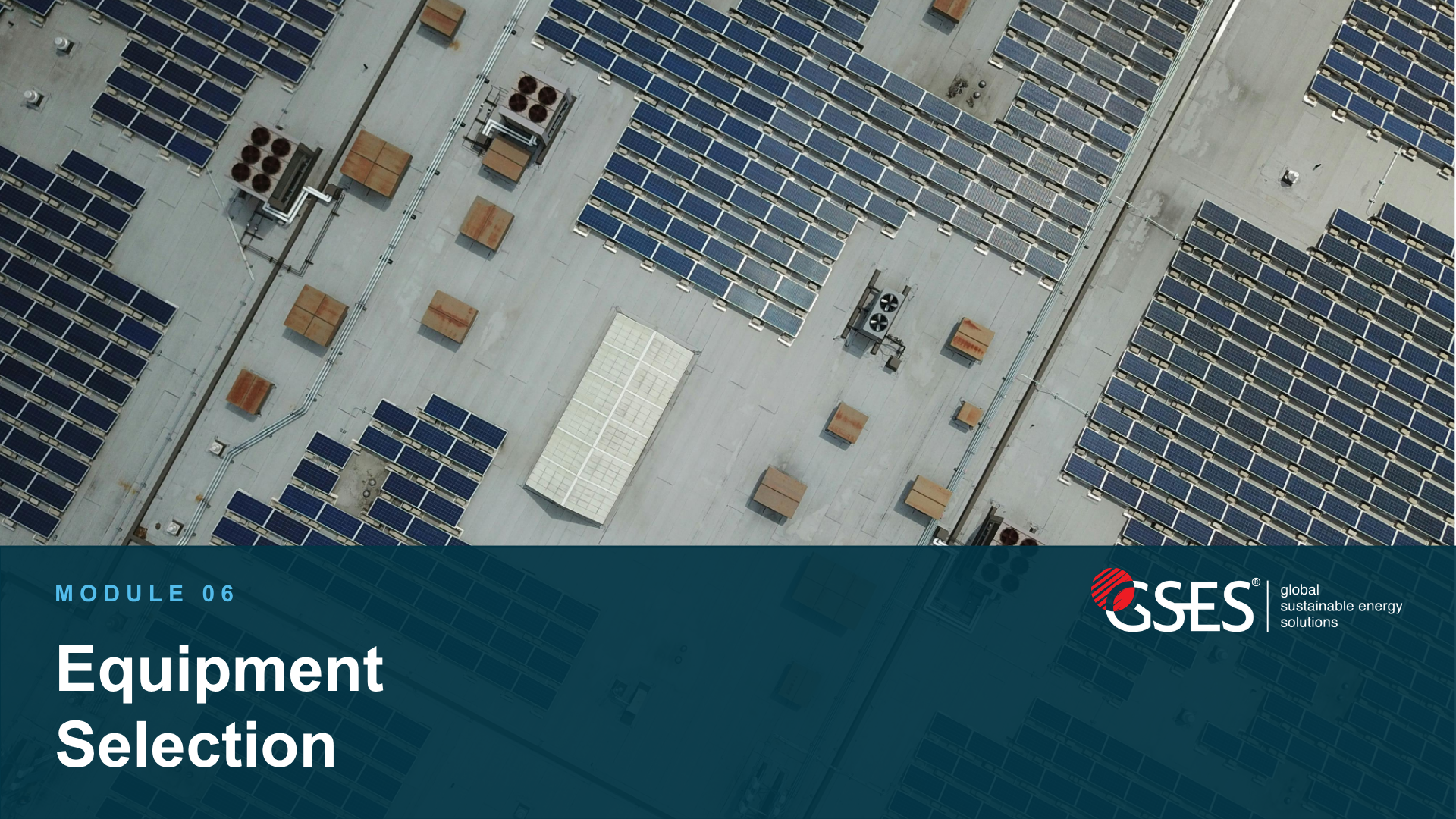
You have enrolled in the sixth course in the Commercial & Industrial Solar series. Upon completion of this course and all assessments, you will receive an automatically generated certificate worth 20 CPD points with Solar Accreditation Australia (SAA).
This module covers how to select and configure PV and BESS equipment for C&I projects. You'll work through string design and MPPT optimisation, inverter station design, module selection, BESS fundamentals and safety requirements, and BESS operations including communications and cyber security.
This course covers the following topics:
- String Design and MPPT Optimisation
- Inverter Station Design and Module Selection
- BESS Fundamentals and Safety
- BESS Operations, Communications and Cyber Security
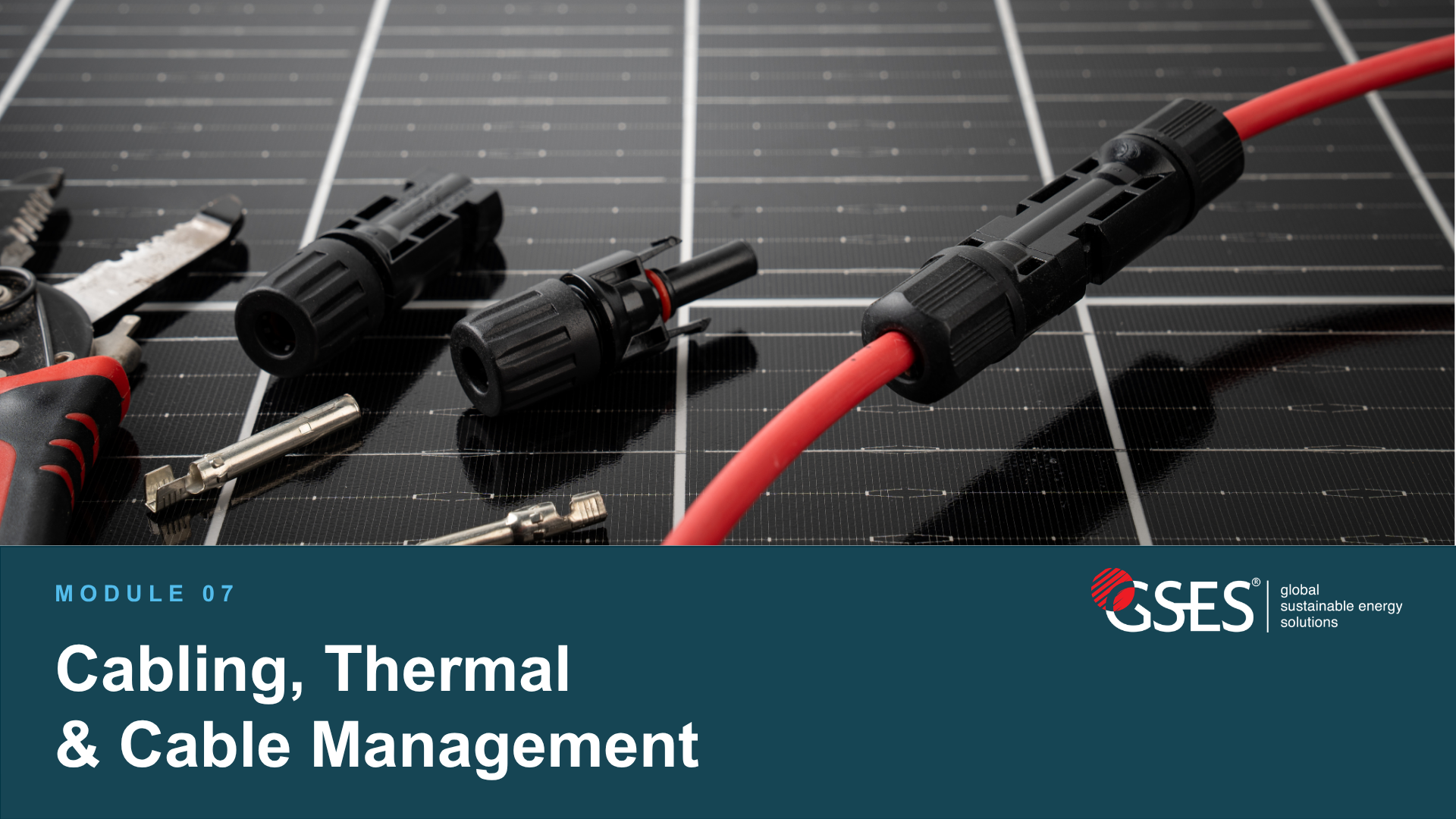
You have enrolled in the seventh course in the Commercial & Industrial Solar series. Upon completion of this course and all assessments, you will receive an automatically generated certificate worth 20 CPD points with Solar Accreditation Australia (SAA).
This module covers cable selection, sizing, installation, and management for C&I solar and BESS systems. You'll work through copper and aluminium selection, thermal design, jointing and termination integrity, earthing and earth grid design, and cable infrastructure including trays, underground cabling, routing, and labelling.
This course covers the following topics:
- Cable Selection: Copper, Aluminium and Thermal Design
- Jointing, Terminations and Connection Integrity
- Earthing and Earth Grid Design
- Cable Infrastructure: Trays, Underground, Routing and Labelling
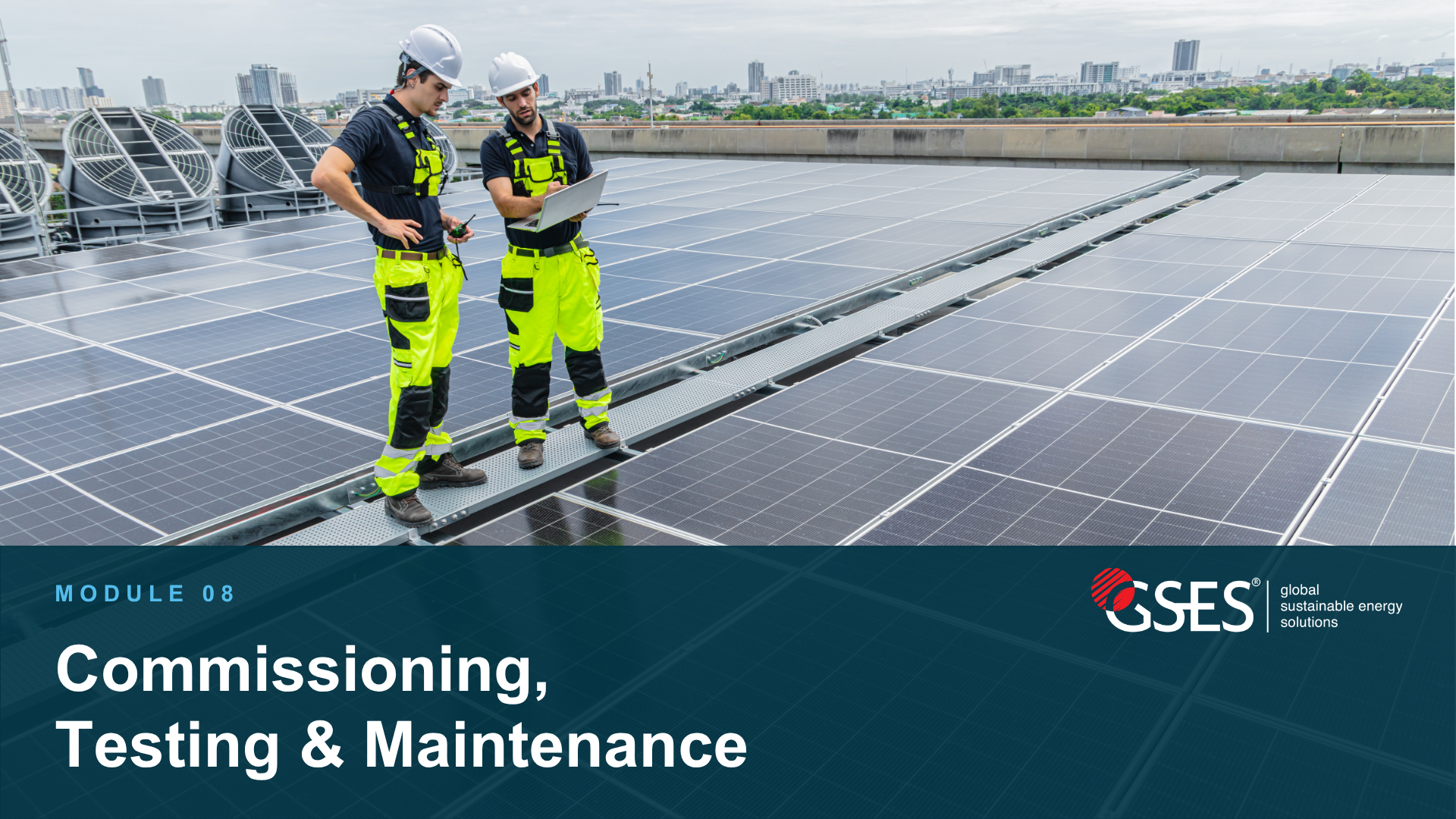
You have enrolled in the eighth course in the Commercial & Industrial Solar series. Upon completion of this course and all assessments, you will receive an automatically generated certificate worth 15 CPD points with Solar Accreditation Australia (SAA).
This module covers the commissioning, handover, and long-term maintenance of C&I solar and BESS systems, alongside real-world failure modes and their root causes. You'll work through compliance verification, monitoring and O&M requirements, common design issues, and operational failure patterns observed across the industry.
This course covers the following topics:
- Commissioning and Compliance Verification
- Handover, Monitoring and Long-term O&M
- Common Design Issues
- Operational Failure Modes